AI Fashion Photography for Australian Fashion Brands
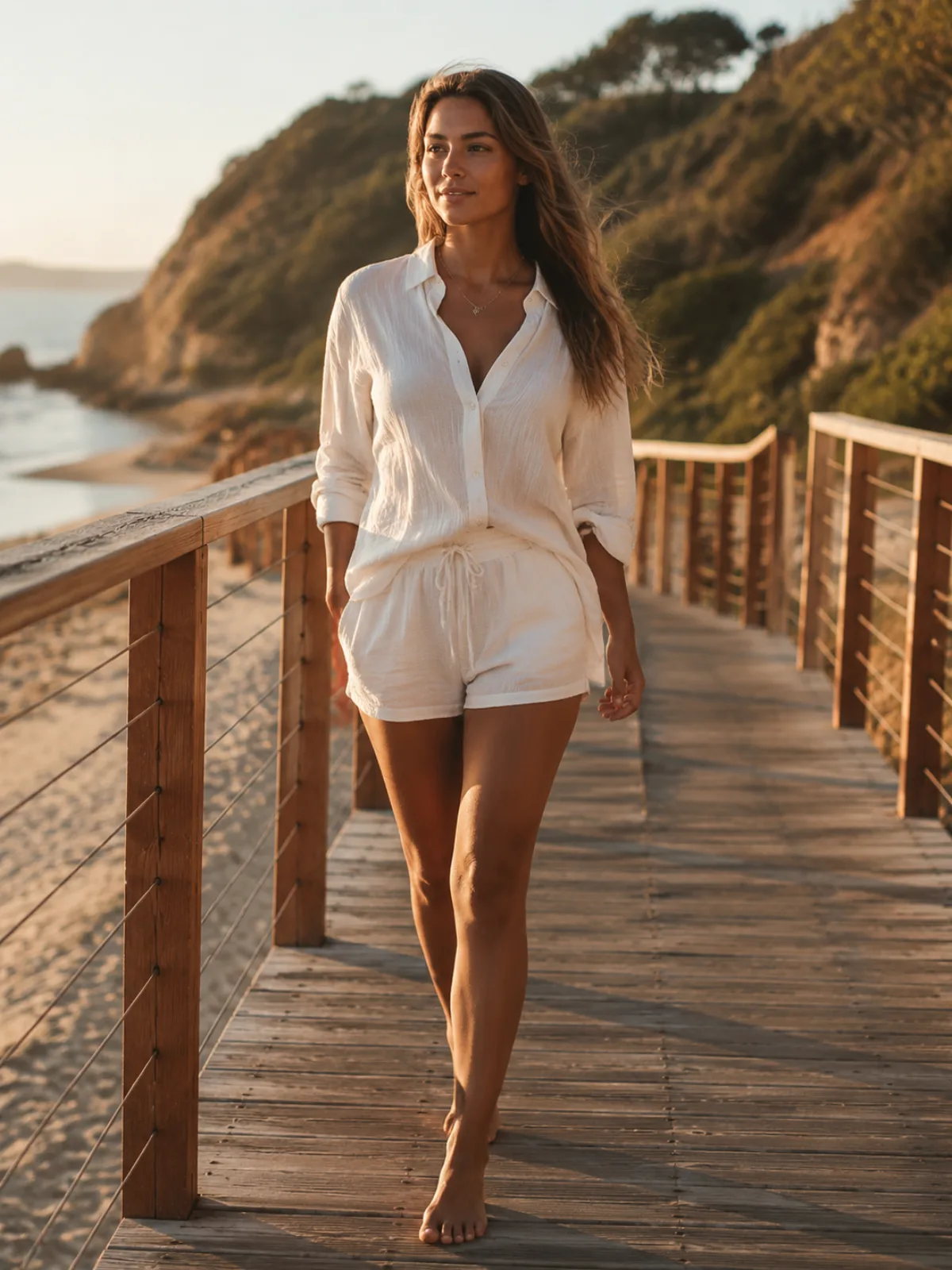
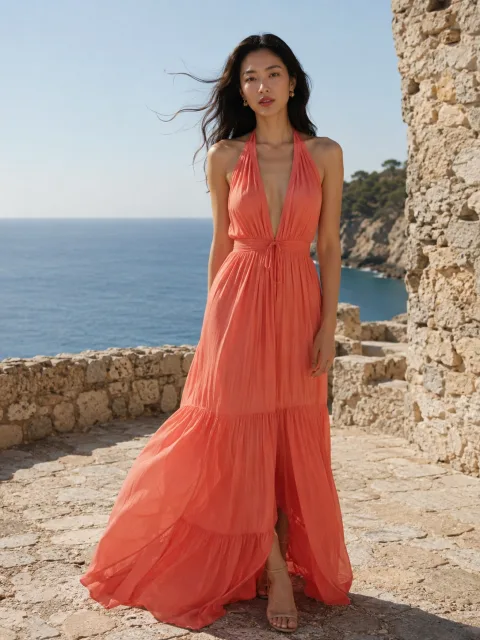
AI fashion photography lets Australian swim, resort and lifestyle brands generate northern-summer campaign imagery — beach light, warm palettes, resort settings — while it is winter on the ground in Australia, without booking travel, permits or a live location shoot.
The seasonal problem Australian brands have always had
Australian swim, resort and lifestyle labels sell into a northern-hemisphere buying calendar that runs opposite to their own seasons. A campaign for a US or European summer launch needs to be shot and ready months before local summer arrives — which has traditionally meant flying a crew somewhere warm during the Australian winter, or shooting in a studio and hoping the lighting reads as authentic beach or resort light. Both options add cost, logistics risk and lead time to a calendar that is already tight.
AI fashion photography removes the seasonal dependency entirely. A beach, a resort terrace or a poolside setting can be generated to match any lighting brief, in any season, without anyone leaving Sydney, Melbourne or Perth in July to find summer somewhere else.
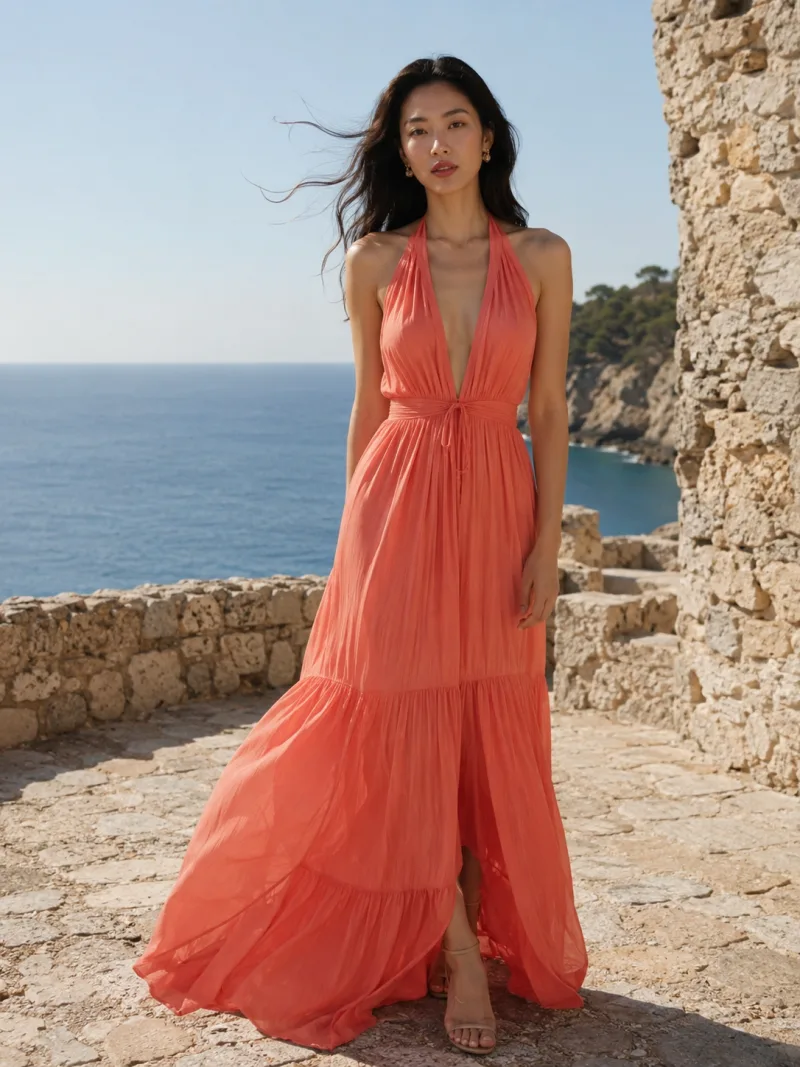
Counter-cycle production: shoot next summer's campaign now
The practical advantage for Australian brands is timing, not just cost. A swimwear or resortwear label planning a spring launch into the US or UK market can generate the full campaign — model looks, beach and resort settings, close-up product detail — during the Australian winter months, with no dependency on local weather, daylight hours or travel windows. The table below sets out the shift in general terms.
| Traditional Location Shoot | AI Fashion Photography | |
|---|---|---|
| Shooting during AU winter | Requires travel to a warm-weather location | Any season or light generated on demand |
| Location permits and access | Booked weeks or months ahead | Not required — no physical location |
| Model and crew travel | Flights, accommodation, logistics | $0 — remote workflow |
| Weather risk on shoot day | Real risk, can delay the whole schedule | None — no shoot day to weather-check |
| Lead time to first cut | Weeks of pre-production plus the shoot itself | Around 48 hours |
For a brand planning a northern-summer launch from the southern hemisphere, that timing shift alone can be the difference between a campaign that ships on schedule and one that is still waiting on a location booking.
Beach and resort scenes without a location shoot
Resort and swimwear brands live or die on setting — the right beach, the right light, the right sense of place. Booking that in real life means securing permits, working around tides and crowds, and hoping the weather cooperates on the one day the crew is on the ground. Generated settings remove all three constraints. A brief can call for a specific time of day, a particular coastline character, or a resort-adjacent poolside look, and the output holds that setting consistently across every image in the set, without a single permit application.
This also opens up settings that would be difficult or expensive to book at all — a private-feeling stretch of coastline, a resort interior, a rooftop pool — without the brand needing a relationship with that specific property or destination.
Remote collaboration that matches how Australian teams already work
Australian fashion and lifestyle brands are used to working with production and manufacturing partners overseas, so a remote AI photography workflow fits an existing pattern rather than introducing a new one. A brief goes out with garment references and a mood direction, a first cut typically comes back within 48 hours, and revisions run on the same cycle — all without a shoot day that needs to be scheduled around anyone's calendar or travel.
- Garment references and a locked model or brand look submitted upfront
- First cut delivered in roughly 48 hours, generally overnight relative to Australian business hours
- Revision notes incorporated same-cycle, without booking anything again
- Final files delivered ready for ecommerce, paid social and wholesale line sheets
Consistency across a full resort or swim range
A resortwear or swim collection typically spans a dozen or more SKUs across several colourways, and buyers expect the same model, lighting and setting across the full range so the catalog reads as one cohesive shoot. With a locked model and setting reference, that consistency holds across the entire range without booking additional shoot days for each new colourway — the same principle that makes AI photography attractive to any brand shooting at volume, not just Australian ones.
Where this fits alongside a brand's existing marketing calendar
AI fashion photography is not a replacement for every asset an Australian brand produces. A signature hero campaign built around a specific real destination partnership may still call for an on-location shoot. But the recurring, high-volume work — seasonal catalog refreshes, paid social creative, wholesale line sheets — is exactly where the counter-cycle advantage matters most, because it is the work that keeps getting delayed by weather and travel logistics under a traditional model. To see how the underlying AI photoshoot process is briefed and delivered, or to explore the broader AI fashion photography and AI photography services this sits within, along with our dedicated guide to resort and swim photoshoots, gives a fuller picture of how a full seasonal range comes together.
Briefing a resort or swim range for the best results
The brands that get the strongest results from a counter-cycle AI photoshoot tend to send a specific, well-structured brief rather than a general request for "summer imagery". Four inputs matter most: a flat-lay or on-body reference for each garment in the range, two or three pinned images that define the exact quality of light and setting wanted — early-morning coastal light reads very differently from midday poolside light, and describing it in words alone leaves too much open to interpretation — clear model casting direction, and a note on which images are needed first if the range will roll out over several weeks of marketing rather than all at once.
Brands shooting a full range across many colourways also benefit from locking the model and setting reference before any variants are generated, so that swapping a colourway doesn't accidentally shift the lighting or framing between images that are meant to sit side by side in a catalog grid.
Frequently asked questions from Australian brand teams
Can this replace our annual hero campaign shoot entirely?
Some brands do move their entire annual campaign to this workflow once they've tested it on catalog work first. Others keep one flagship shoot on location for its specific creative concept and move everything else — the bulk of the volume — to AI production. Both are common, and the right answer depends on how much of a brand's identity is tied to a specific real location.
How far in advance should we brief a northern-summer launch?
Because there's no location booking or travel to plan around, the lead time is mostly about creative development and revision rounds rather than logistics — most brands start the brief six to eight weeks ahead of their go-live date, largely to leave room for internal sign-off cycles rather than production time itself.
Does the generated setting need to match a real, specific beach or resort?
No — most briefs describe a character of place (coastal, tropical, resort-adjacent) rather than a named real location, which gives more creative flexibility and avoids any question of location rights or permits altogether.
What if our range needs to show the same look in both a beach setting and a studio product shot?
Both come from the same brief and the same locked model and garment reference, so a range can include beach lifestyle imagery alongside clean studio-style product shots without needing to treat them as two separate productions or reconcile two different model bookings.