AI Images for Paid Social Ads: Format & Testing Guide
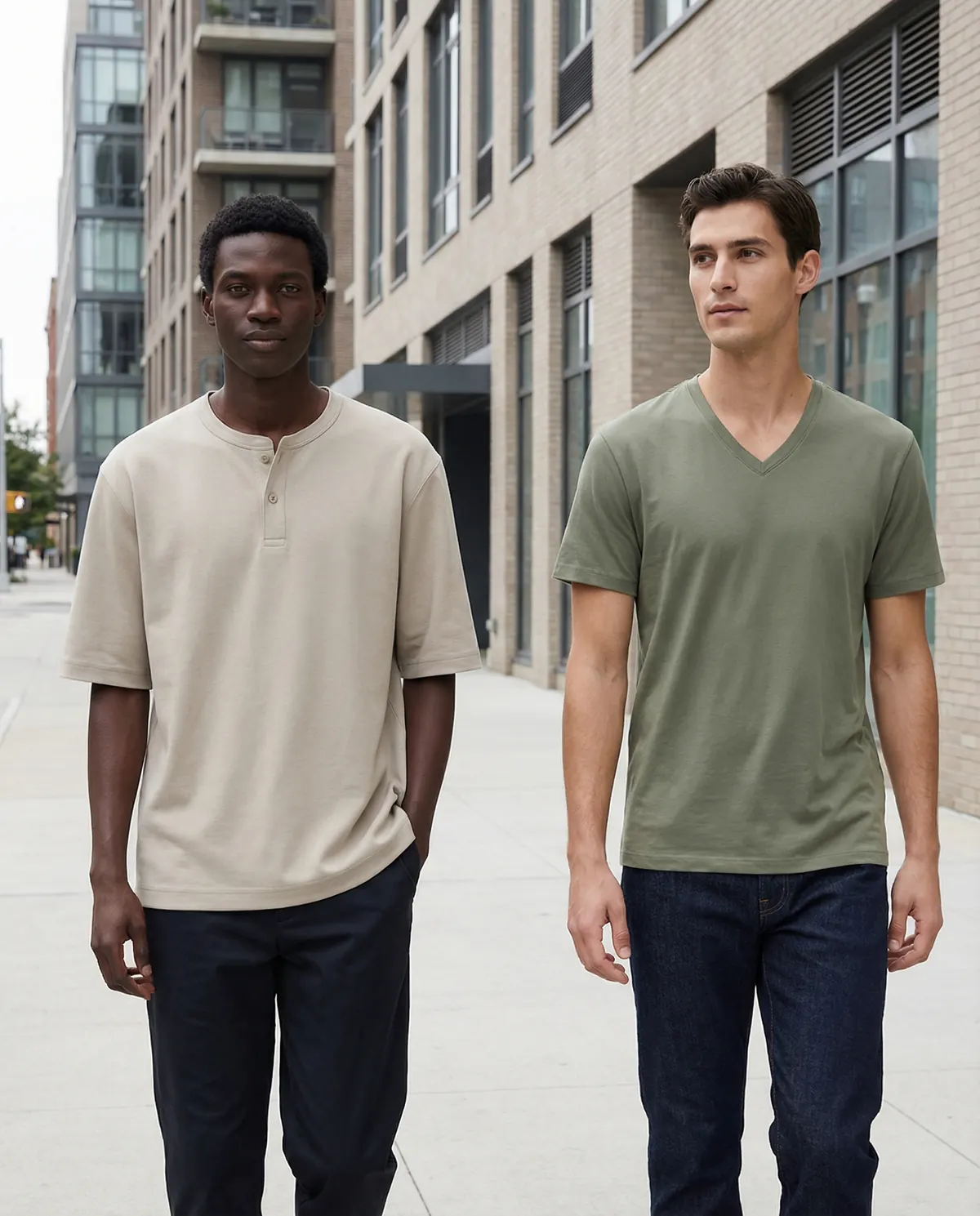
Paid social runs on three image shapes, a handful of composition rules that hold attention in a moving feed, and a refresh clock that never fully stops. AI production fits all three, because a single locked reference can be re-cropped, re-lit and re-styled far faster than a reshoot.
The format matrix: 1:1, 4:5, 9:16
Three ratios cover almost every paid social placement in 2026, and each rewards a slightly different composition approach.
1:1 (square)
Still common in feed placements and carousels. A square crop suits product-forward shots where the subject sits centered, with enough negative space around it that the platform's own UI elements do not crowd the image.
4:5 (portrait)
Claims more vertical real estate in a mobile feed than a square does, which is why many platforms favour it for reach. Works well for full-length fashion and lifestyle shots where showing more of the frame top to bottom adds information rather than empty space.
9:16 (full vertical)
The story and Reels shape. Composition needs to account for safe zones — the top and bottom of the frame are typically covered by platform UI, captions or a call-to-action button, so the subject and any key message should sit in the middle third.
Producing all three from one AI reference set means a single brief covers a full placement plan, rather than three separate production efforts.
Scroll-stopping composition principles
A few patterns consistently earn attention in a fast-moving feed, regardless of production method.
- Lead with a clear subject in the first third of the frame — ambiguity costs attention in the first half-second
- Use colour contrast against a typical feed background rather than blending into it
- Keep any text overlay short and legible at thumbnail size, since most viewers see the image small before they see it large
- Show the product or outcome, not just a mood — paid social performs best when the value is visible, not implied
Ad-fatigue refresh cadence
Every paid social creative has a shelf life, measured in frequency — how many times the same audience sees the same ad. Once frequency climbs and click-through starts to slide, the fix is new creative, not a bigger budget. Fast-moving accounts often refresh top-spending creative every two to four weeks; slower accounts can stretch further, but the direction of travel is the same everywhere: the refresh cycle is shrinking as more advertisers compete for the same attention.
The practical constraint has always been production speed. A studio shoot cannot realistically turn around a meaningful refresh inside two weeks once planning, shooting and editing are accounted for. An AI pipeline working from assets already on file can, because the reference work is already done — only the variant changes.
Product accuracy and platform compliance
Paid social platforms review ad creative against policies covering misleading claims, prohibited content and, increasingly, disclosure of AI-generated or AI-modified imagery. The single most important production discipline for staying inside those policies is product accuracy: colour, proportions, logo placement and material should match the real product exactly, because a mismatch between an ad image and the product a customer receives is both a policy risk and a returns problem.
Locking a clean product reference before generation, and having a human reviewer check every variant against it, closes most of that gap. Compliance policy changes by platform and by region, and the current version of each platform's policy should be checked directly rather than assumed to match last quarter's rules.
A second compliance layer worth building into the review step is claims accuracy. An image that visually implies a specific result — a before-and-after transformation, a performance outcome — can trigger the same scrutiny as a written claim would, even with no text on the creative at all. Reviewing composition for implied claims, not just literal accuracy, avoids rejections that a purely visual quality check would miss.
Mobile-first viewing conditions
The overwhelming majority of paid social impressions happen on a phone, often in a bright environment, at a small physical size, and for a fraction of a second before a thumb keeps scrolling. Composition choices that read well on a large monitor during design review can disappear entirely under those conditions. Testing a creative at actual thumbnail size before it ships — not just at full resolution on a desktop screen — catches problems like text that is too small to read, a subject that is too far from camera, or contrast that washes out under bright ambient light.
This is a fast, low-cost check worth building into every review step, and it applies equally whether the image came from a studio shoot or an AI production pipeline.
Designing for the platform, not just the format
Ratio compliance is only the starting point. Each major platform has its own visual culture, and creative that reads as native to that culture consistently outperforms creative that looks recycled from somewhere else. Feed content on one platform favours a slightly rawer, less polished look that blends with organic posts; a display network favours a cleaner, more graphic-led composition built to be legible at a glance. The same product shot, art-directed two different ways, will often perform differently across the two even though the underlying asset is identical.
This is another place AI production has a practical edge: because the underlying reference is reusable, adapting one concept into several platform-native treatments costs far less than commissioning separate shoots for each platform's visual style.
Building a paid social image library
A well-organized image library shortens every future test cycle. Sorting finished creative by format, hook and campaign, alongside the raw reference assets each was built from, means a new test can be assembled from existing approved material rather than starting from a blank page. It also makes it possible to see, at a glance, which combinations of hook and format have already been tried, so testing budget goes toward genuinely new questions instead of repeating old ones.
Locked model and product references are worth keeping separately from finished ads specifically because they are reusable across many future campaigns, not just the one they were originally produced for.
The creative iteration workflow
A working iteration loop has four steps: launch a small batch of variants against a controlled audience, let the data accumulate to a meaningful sample, identify which hooks or formats are pulling ahead, then commission a new batch that doubles down on what worked while testing one new variable. Treating each cycle as informed by the last, rather than a fresh blank page, is what turns paid social from a series of one-off campaigns into a compounding creative program.
The pace of that loop is set by production speed as much as by data collection. A test that takes two weeks to read but three weeks to act on loses momentum; keeping the production side fast enough to match the data side is what keeps a testing program moving instead of stalling between cycles. See our full breakdown of AI advertising visuals for how a variant matrix is scoped, and our companion guide on creative testing with AI visuals for how to structure the test itself.