AI Photography for Jewelry and Accessories Brands
Fine jewelry sets a higher accuracy bar than almost any other category of AI photography: the piece itself must be exact, down to the stone setting and metal finish, while the environment and model around it can be generated freely. Reference-based product fidelity, not creative licence, is what makes this work for a high jewelry or watch brand.
The short answer
Jewelry and watches are unforgiving subjects because the product is the entire story. A generation model given loose direction will happily invent a plausible-looking ring — the wrong stone cut, a subtly different prong count, a clasp that doesn't exist on the real piece. None of that is acceptable for a brand whose value proposition rests on precision and craft. The workable approach locks the product itself from high-resolution reference photography and lets the model generate everything around it — the hand, the wrist, the lighting, the background — with the piece held constant.
Why jewelry is the hardest accuracy test in AI imagery
Most fashion categories have some tolerance for approximation — a dress can drape slightly differently across generated frames and still read as correct. Jewelry has almost none. A stone that's a shade too yellow, a setting with one prong too many, a chain link pattern that doesn't match the actual production piece — these are the details a jewelry brand's own quality team is trained to catch instantly, and they are exactly the details a general-purpose AI model tends to get wrong when working from a text prompt alone.
The fix is architectural, not artistic: treat the product photograph as a hard reference the model must match, not a mood board it can reinterpret. High-resolution macro photography of the actual piece — multiple angles, the clasp mechanism, the stone from the front and in profile — becomes the input the model is locked to, with the scene, model and lighting generated as variables around that fixed point.
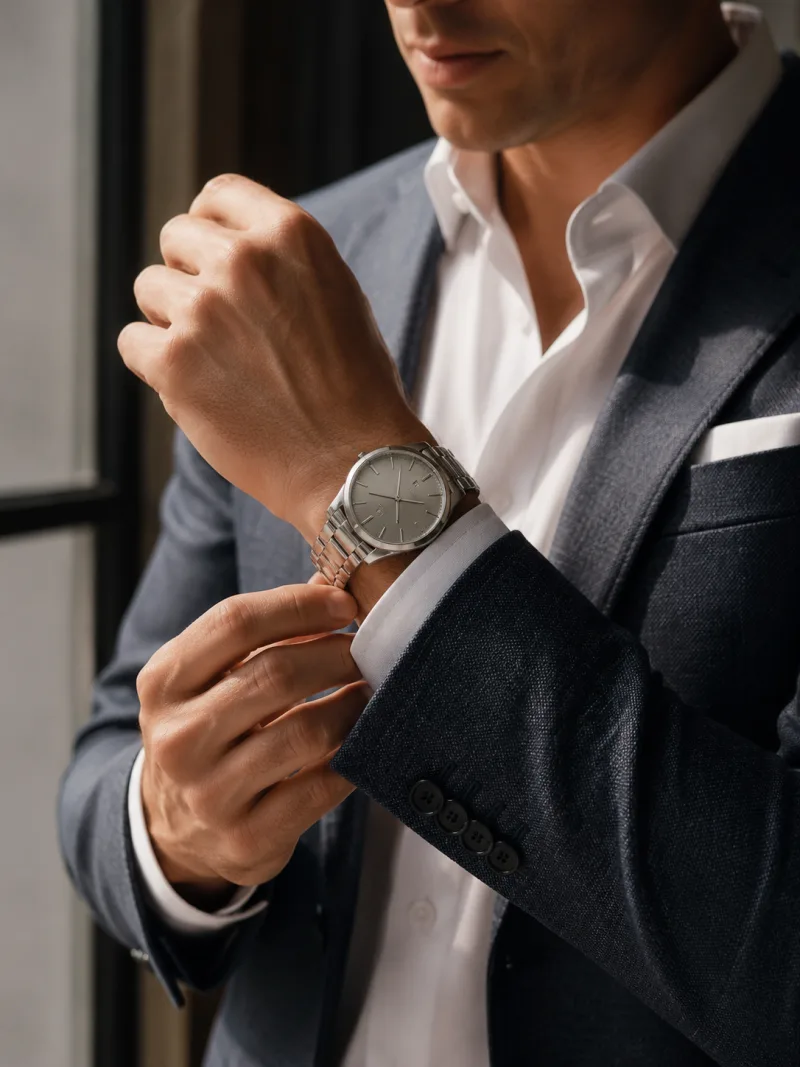
Macro detail sets and on-model context — two different jobs
A jewelry or watch catalog typically needs two distinct kinds of imagery, and they demand different discipline:
- Macro product sets. Tight, still-life detail shots where the piece is the entire frame. These need the highest reference fidelity — any generation here is really "reconstruction," not creative interpretation, and should be checked stone-by-stone and facet-by-facet against the real piece.
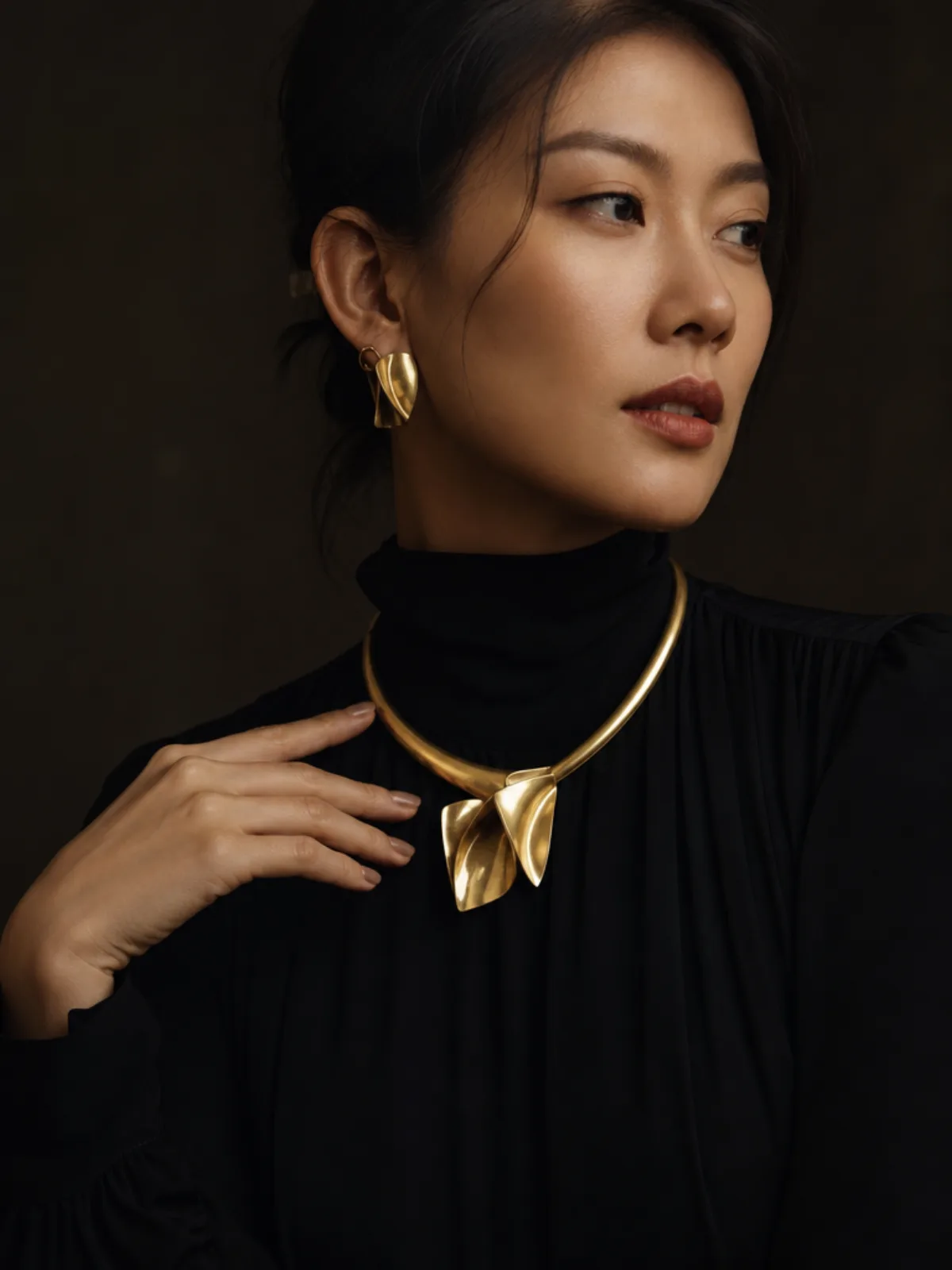
- On-model context sets. The same piece worn on a hand, wrist, neck or ear, set in an environment that supports the brand story. Here the model, pose, lighting and setting are the creative variables, while the product itself remains locked to reference.
Brands that get the best results brief these as two separate deliverables rather than one blended shoot, because the acceptance criteria — and the review process — are genuinely different for each.
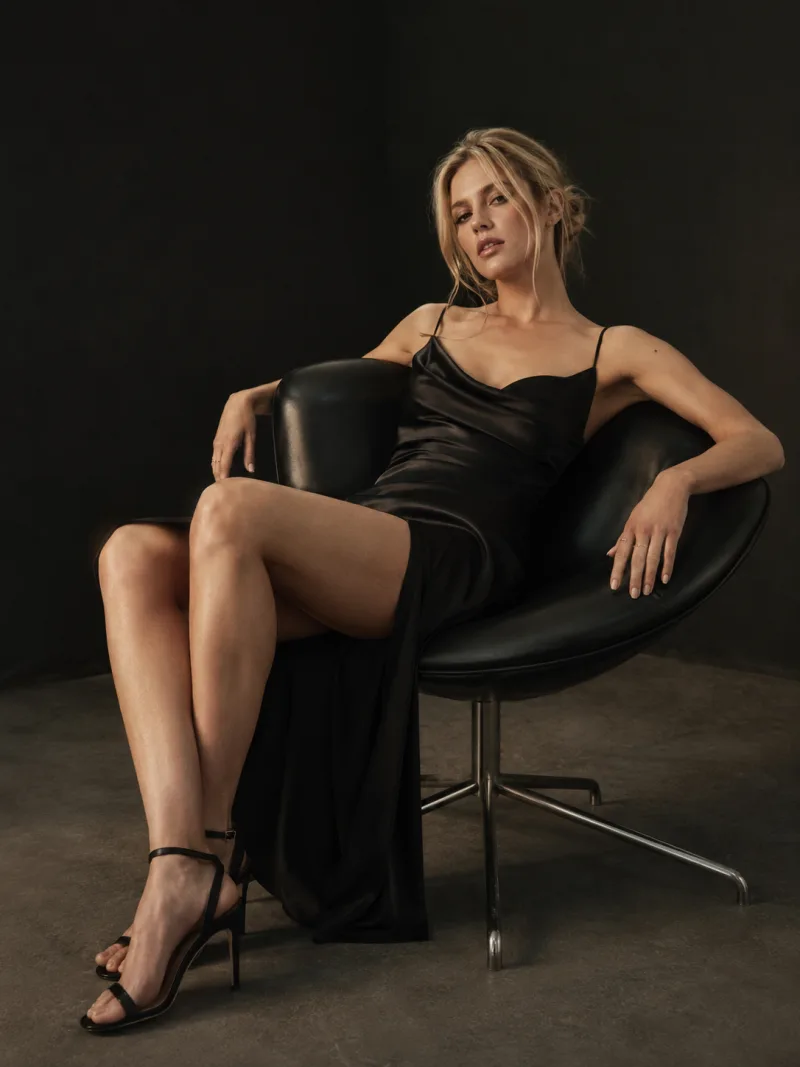
Dark-editorial art direction for high jewelry
High jewelry photography leans on a specific visual language — deep, controlled backgrounds, directional light that catches facets rather than flattening them, and a restraint in styling that lets the piece hold the frame rather than compete with it. This art direction has to be specified explicitly in a generation brief, because a model left to its own defaults will often push toward brighter, flatter, more commercial lighting that reads as mass-market rather than high jewelry.
The same discipline applies to watches and leather goods, where the finish of a case or the grain of a hide carries as much weight as the jewelry stone does. A locked reference for material finish, paired with generated context around it, is the pattern that holds across all three categories.
AI photography vs traditional jewelry photography
| Traditional Studio Shoot | AI Photography | |
|---|---|---|
| Macro product photography | Specialist photographer required | Still required as the reference input |
| Model and studio for on-model sets | $3,000–$10,000 per day | Generated from a locked model identity |
| Location or set for context shots | Built or booked per shoot | Generated per brief, no build cost |
| Additional angles or colourways | New studio session | Generated from the same reference set |
| Turnaround for a full collection | 2–5 weeks | Typically days once reference is locked |
The macro product photography itself doesn't disappear — it becomes the reference the rest of the campaign is built from, which is a different role than it plays in a traditional shoot but no less essential.
Watches and leather goods carry the same standard
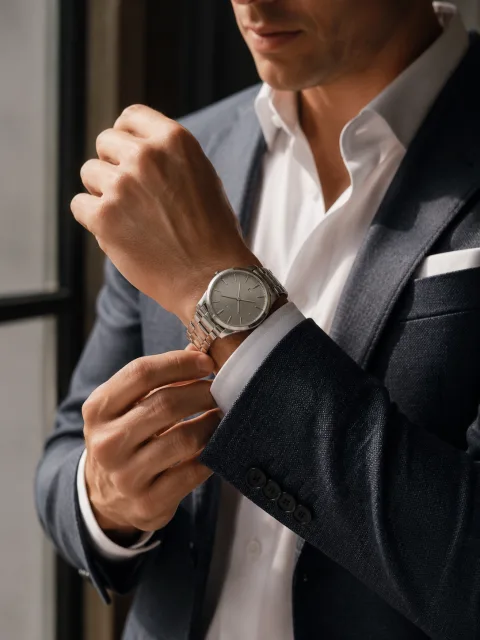
Everything above applies almost unchanged to watches and leather goods, with a different set of details to lock. For a watch, the case finish — polished, brushed, or a mix across facets — has to match exactly, along with dial texture, hand shape and any branded engraving on the case back or clasp. For leather goods, hide grain, stitching pattern and hardware plating are the equivalent of a stone setting: the details a brand's own team notices first and a generic model is most likely to smooth over.
The practical implication is the same across all three categories. A brief that hands over only a hero product photo and a general description invites the model to fill gaps with plausible-but-wrong detail. A brief that includes multiple angles, a macro pass on the highest-risk details, and explicit notes on anything unusual about the piece — an asymmetric clasp, a two-tone finish, a stone with visible inclusions that are part of its character rather than a flaw — gives the generation process almost nothing to guess at.
Seasonal and campaign volume without repeated studio days
Jewelry and watch brands typically run a narrower set of hero pieces through a much wider set of contexts across a year — a holiday capsule, a bridal edit, a summer resort story, region-specific campaigns for different markets. Under a traditional model, each of those contexts usually means booking a new model, a new studio day, or both, even though the product itself hasn't changed. Once a piece's reference set is locked to the accuracy standard described above, the same product can be placed into a new context — a different model, a different setting, a different mood — without a new physical shoot for every variation.
This is where the economics shift most clearly in the brand's favour. The upfront cost of building an accurate reference set is fixed per piece; the marginal cost of generating additional contexts against that same reference drops sharply compared to a traditional model where every new context effectively means a new production day.
Where human review still matters most
Even with a locked reference, jewelry imagery benefits from a review step that goes beyond checking for the usual AI artefacts — warped hands, garbled text, odd shadows. The reviewer needs a working knowledge of the specific piece: whether that stone's facet pattern is correct from this angle, whether the clasp mechanism shown is mechanically plausible for how the real piece closes, whether a chain's link spacing matches production tooling rather than an approximation. This is closer to the quality control a jewelry brand's own production team already runs on physical samples than to a generic photo-editing review, and it works best when the reviewer has access to the same reference material the generation process was built from.
What to check before commissioning jewelry imagery
- Does the provider work from your actual product reference photography, or from a text description of the piece?
- Is there a dedicated review step for stone, setting and metal accuracy before an image is approved for use?
- Are macro product sets and on-model context sets treated as separate deliverables with separate accuracy standards?
- Can the same locked reference be reused across multiple seasonal contexts without a new physical shoot each time?
- Does the finished work transfer full commercial usage rights, with no restriction on which markets or platforms it can run in?
This accuracy-first approach sits within the same production discipline used across our broader AI fashion photography and AI photoshoot work, and the same governance questions apply whether the brand is a jewelry house, a watchmaker or a leather goods label. For how the wider luxury sector is approaching AI imagery, see AI fashion photography for luxury brands.