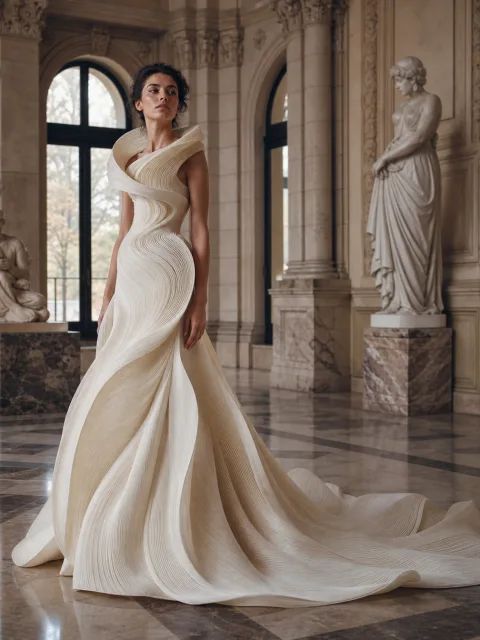
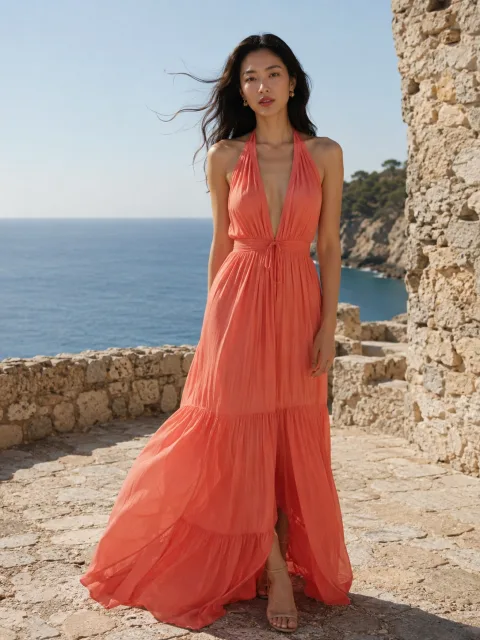
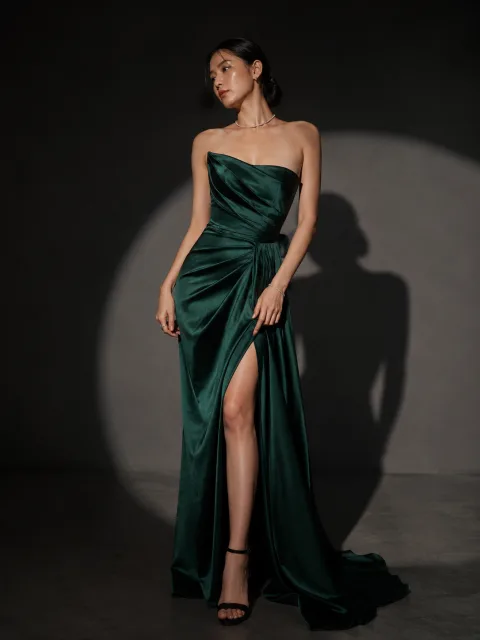
AI Photoshoot for Luxury Swimwear Brands
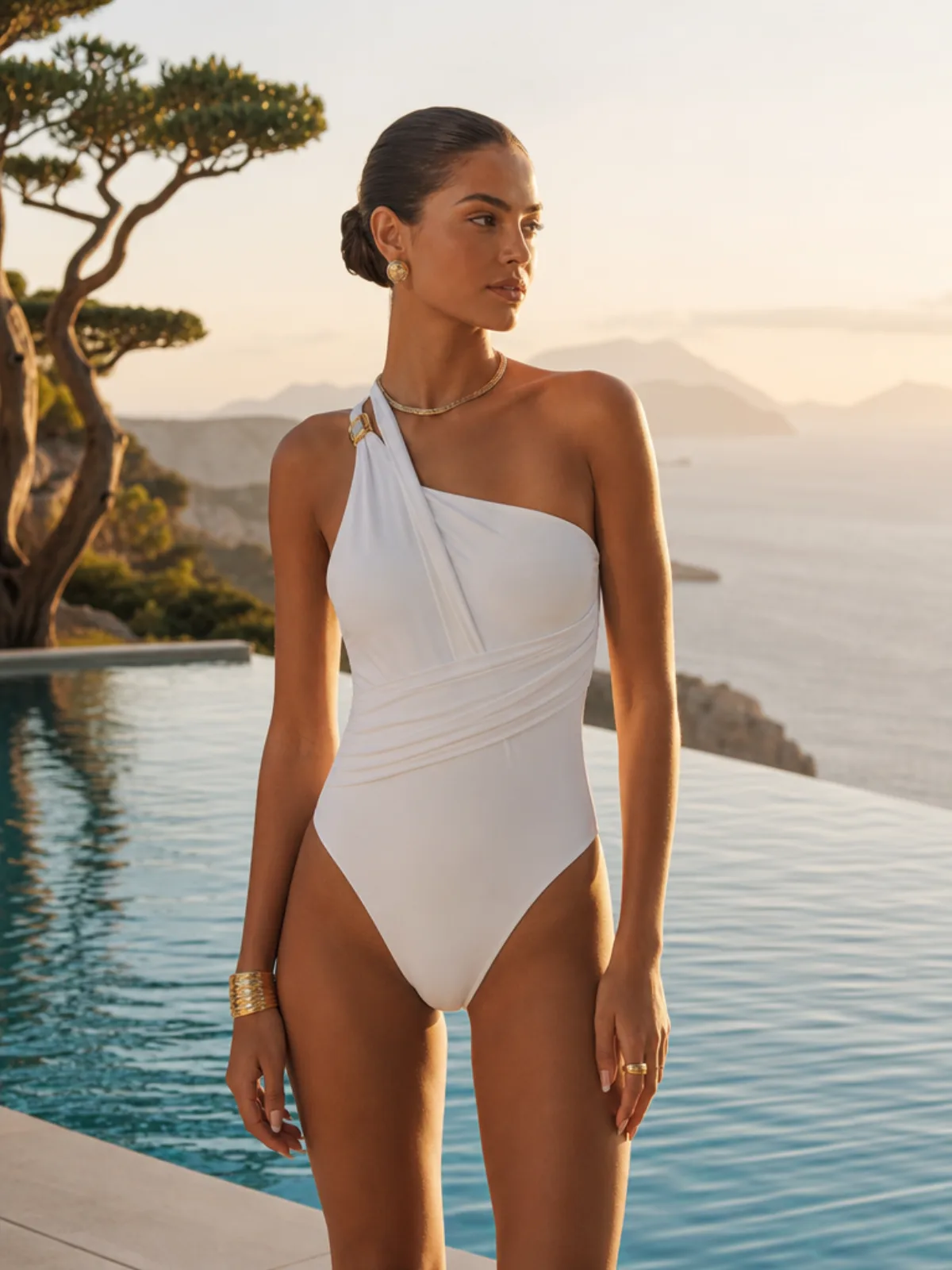
A resort-grade AI photoshoot lets a swimwear or resortwear label shoot Mediterranean or Maldives-calibre campaign imagery without booking a location, flying a crew, or clearing a permit. Done well, it holds fabric sheen and fit to the same standard a client-facing photographer would insist on — and it moves fast enough to work against a counter-seasonal drop calendar.
The short answer
For a premium swim or resortwear house, the AI photoshoot question isn't whether the technology can produce a beautiful frame — it can. The real question is whether it can hold the specific things that make swimwear photography unforgiving: how a jersey or lined tricot catches light when wet or dry, how a cut sits on the body at a true size, and whether a locked location reads as a genuine place rather than a generic beach. When those three things are handled with discipline, an AI-generated campaign can sit next to traditionally shot imagery without announcing itself.
Why resort-luxury swim is a harder brief than it looks
Swimwear photography carries a narrower margin for error than most categories. The garment is small, close to the body, and shot in bright, unforgiving light — every seam, gather and strap placement is visible. A generic AI photoshoot tool, trained on broad fashion data, tends to smooth over exactly the details a swim brand's technical design team would flag: the way a ruched panel gathers, the return of a supportive underwire, the precise drape of a sarong tie.
A production process built for this category treats the garment reference as non-negotiable. Flat-lay or on-form photography of the actual piece — including the lining, the hardware and the seaming — becomes the anchor the generated image is built around, rather than a rough starting point the model is free to reinterpret.
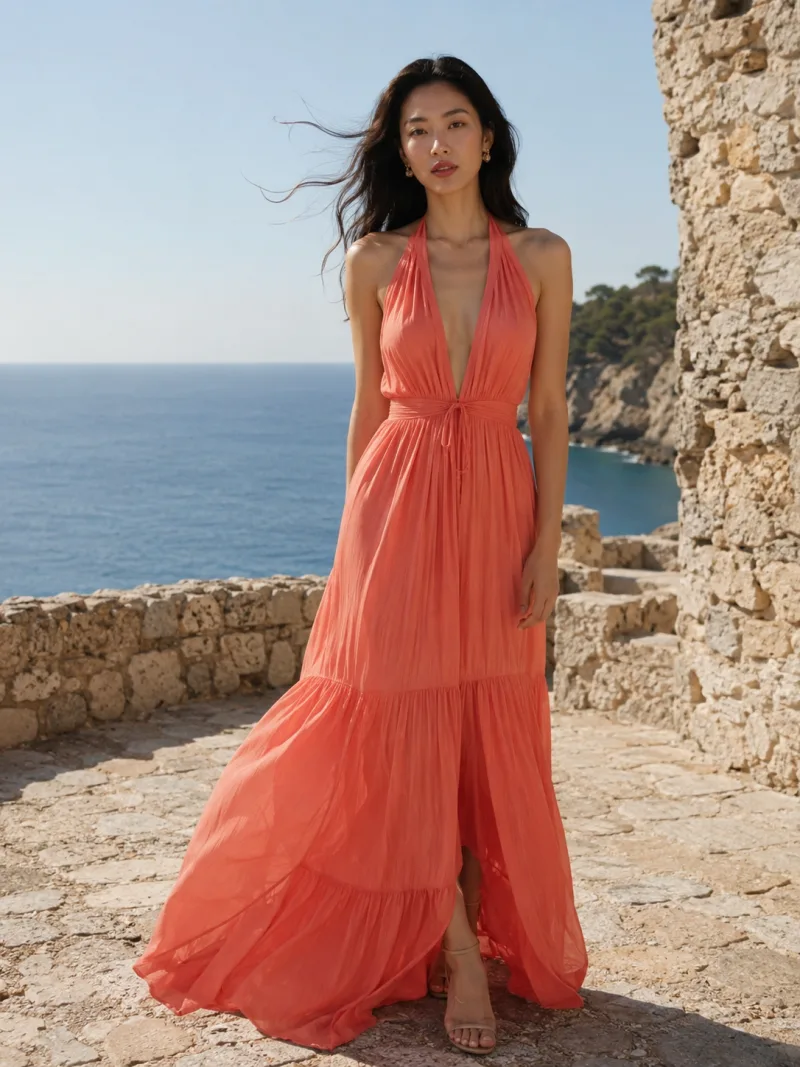
Shooting Mediterranean and Maldives-grade settings without travel
The single biggest cost line in a traditional resort campaign is usually the location: flights, permits, a location scout's fee, and the weather risk that comes with booking a specific week on a specific coastline. An AI photoshoot removes that constraint almost entirely. A creative director can specify a private terrace above the Amalfi coast at 5:30pm in late September, or an overwater villa deck in the Maldives at first light, and receive a set of images built precisely to that brief — without a single flight booked or permit filed.
This matters more for resort-luxury swim than for most categories, because the setting is doing as much brand work as the garment. A campaign that reads as "shot in Positano" carries a different weight than one that reads as "shot on a stock beach," and the difference has always come down to production budget more than creative vision. Generated settings close that gap for brands that can't justify a location shoot for every drop.
Fabric sheen, fit and the accuracy bar
Three technical details separate a passable AI swimwear image from one that would clear a brand's own quality control:
- Sheen and wet-look accuracy. Technical swim fabrics behave differently wet than dry, and lined pieces reflect light differently than unlined ones. This needs to be referenced explicitly, not left to the model to guess.
- Fit at the brand's true size range. A one-piece or bikini has to sit the way it would on the brand's actual fit model, not a generic idealised body — this is where reference photography of the real garment on a form does the most work.
- Hardware and trim fidelity. Clasps, rings, ties and any branded hardware need to render as the specific piece, not an approximation. Macro or close reference shots of hardware prevent this from drifting.
Brands that have been burned by a self-serve tool usually cite one of these three failures — the fabric looked plastic, the fit looked generic, or a hardware detail was subtly wrong. A production process built around reference-first generation and a trained reviewer's sign-off is what closes that gap.
Tasteful art direction for a luxury audience
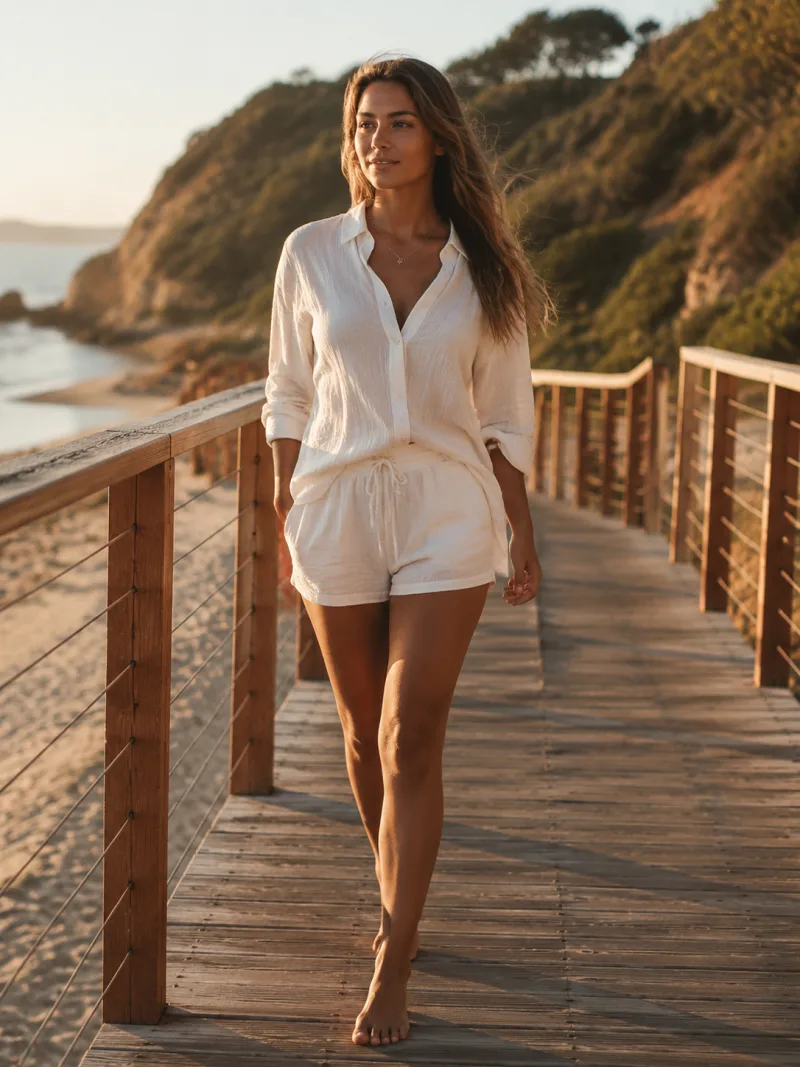
Swimwear photography sits close to a line that luxury brands are careful not to cross — the difference between editorial sensuality and something that reads as generic or overtly commercial. This is an art direction discipline, not a technology one, and it applies whether the imagery is generated or shot on film. A locked mood board, specific posing references, and a house style guide for cropping and lighting need to travel into the AI brief exactly as they would into a photographer's call sheet. Left unspecified, a generation model will default toward whatever is statistically common in its training data, which tends to skew more commercial than a luxury house wants.
The brands getting the most out of AI photoshoot production for swim are the ones treating the brief with the same rigour they'd apply to a traditional shoot — a locked reference deck, explicit direction on cropping and pose, and a review pass by someone who knows the brand's codes, not just the technology.
AI photoshoot vs a traditional resort shoot
| Traditional Resort Shoot | AI Photoshoot | |
|---|---|---|
| Location, flights, permits | $8,000–$30,000+ | $0 — any coastline generated |
| Weather risk | Real — can delay or reshoot | None |
| Model and crew travel | Multi-day commitment | Not required |
| Turnaround for a full drop | 3–6 weeks including post | Typically days |
| Colourway and setting variations | Limited to what was shot on location | Generated as needed post-production |
The gap is largest for brands running several counter-seasonal drops a year, where the cost and lead time of repeated location shoots compounds quickly.
Working a counter-seasonal drop calendar
Resort and swim brands increasingly ship counter-seasonal — northern hemisphere resort imagery shot or generated during winter for a spring drop, and vice versa for southern hemisphere markets. A traditional shoot calendar has to fight real seasons and real weather to make this work, often shooting a "summer" campaign on an overcast late-autumn day and hoping the retouch can compensate. An AI photoshoot sidesteps the constraint: the generated setting is always in the right season and the right light, regardless of when the brief lands on a production calendar.
This is one of the more practical, less glamorous advantages of the approach — it isn't about a single hero image, it's about a production pipeline that can turn a four-market, counter-seasonal release calendar around without the brand's photography budget scaling linearly with the number of drops. It sits alongside broader AI fashion photography capability as one of the more mature use cases in the category, and pairs naturally with a wider AI photography production line for a brand running catalog, social and campaign imagery in parallel.
Casting, coverage and consistency across a drop
A resort campaign rarely lives on one hero image. A single drop typically needs the same look carried across a dozen or more pieces — different colourways of the same silhouette, a one-piece and its matching cover-up, a bikini shown from three angles for an e-commerce listing. Holding a consistent model identity, consistent lighting and a consistent sense of place across that full set is where a casual approach to AI photoshoot production tends to fall apart: small drifts in skin tone, hair, or the angle of the light accumulate across dozens of images and the campaign stops looking like one shoot.
A disciplined process locks the model reference once per campaign and locks the location and light once per set, then treats every piece within that set as a variation on those two fixed points rather than a fresh generation each time. This is closer to how a traditional shoot actually works — one model, one location, one lighting setup, many looks — than to how a self-serve tool is typically used, prompt by prompt, image by image.
Where AI photoshoot production stops for swim
It's worth being direct about the current limits. Extreme close-up shots of wet fabric clinging to skin, where the physics of water on a specific technical textile is the entire point of the image, remain the hardest case for generation-based photography and the one most likely to need a traditional reference or a hybrid approach. Similarly, any hero campaign image where a brand wants the specific, slightly imperfect texture of an actual location — the exact grain of a particular stretch of sand, the true colour of a specific pool tile — is better served by real photography of that real place, even if the model and some surrounding context are generated.
The honest framing for most resort-luxury brands in 2026 is that AI photoshoot production has become the default for volume — catalog variations, secondary looks, most social and e-commerce imagery — while a smaller set of true hero images may still warrant a traditional shoot, particularly where a specific real location is part of the brand story itself.
Questions to ask before commissioning a resort campaign
- Is the fabric and hardware generated from a real reference of the actual production sample, or approximated from a generic swimwear dataset?
- Who reviews fit and proportion accuracy before an image ships — a technical designer, a trained reviewer, or no one?
- Does the engagement transfer full commercial usage rights on delivery, with no ongoing licence fee?
- Can the same location and light be reused consistently across a full drop, so the campaign reads as one shoot rather than a set of disconnected images?
For a longer view on how the broader luxury category is approaching this shift, see AI fashion photography for luxury brands.