AI Photography for Beauty Brands: Skincare Campaign Imagery
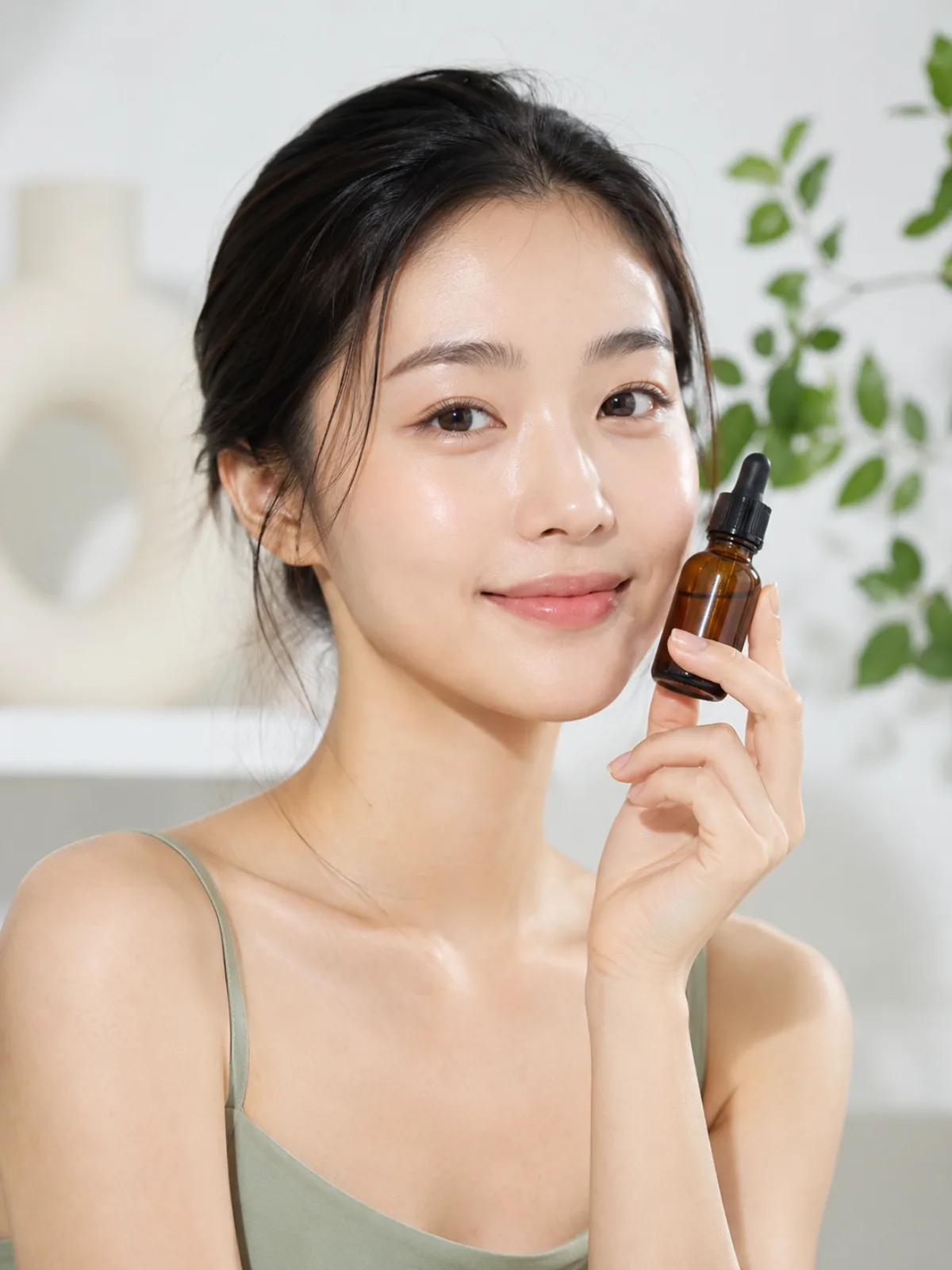
AI photography lets beauty brands produce campaign, product-page and social imagery — model shots, texture shots, styled product scenes — from packaging references alone, typically in about 48 hours. The two things that make it work in beauty specifically: a reference-based workflow that keeps packaging pixel-faithful, and a skin-realism standard strict enough for a category whose entire subject is skin.
Why beauty is the hardest category to fake — and the best one to generate
Beauty imagery has less room for error than almost any other vertical. The product is small, the label is covered in regulated text, and the model's skin is not background — it is the subject. A slightly warped seam on a jacket might pass; a slightly warped ingredient list on a serum bottle will not.
At the same time, beauty brands carry one of the heaviest imagery loads in commerce: every SKU needs product-page shots, every campaign needs hero visuals, every launch needs a social set, and every retail partner asks for its own crop. Traditional production meets that load with repeated studio days — models, manicurists, macro lenses, product stylists — at costs that often run $15,000 to $60,000 for a single campaign wave. That combination of high difficulty and high volume is exactly where a disciplined AI photography workflow earns its place.
Packaging must be exact: the reference-based workflow
Generated packaging fails in predictable ways when it is generated from a text description: fonts drift, logos smear, ingredient text becomes decorative gibberish. No beauty brand can ship that. The professional workflow never generates packaging from imagination — it composites and generates around a locked reference.
In practice the process looks like this:
- Capture the reference once. The real bottle, jar or tube is photographed cleanly — front, back and label detail — on a plain background. This is the single source of truth for every image that follows.
- Lock it in the pipeline. The reference is carried through generation so the pack appears with its exact typography, cap geometry, glass colour and label layout in every output scene.
- Generate the world, not the pack. The set, lighting, props, hands and models are generated around the locked product. The pack itself is never left to the model's imagination.
- Verify against the physical product. Final review puts the output next to the real packaging. Any drift in label text, colour or proportion sends the frame back.
This is the same discipline covered in our broader guide to AI product images, tightened one notch for beauty because label text is regulated content, not decoration.
Skin-texture realism: the standard that decides everything
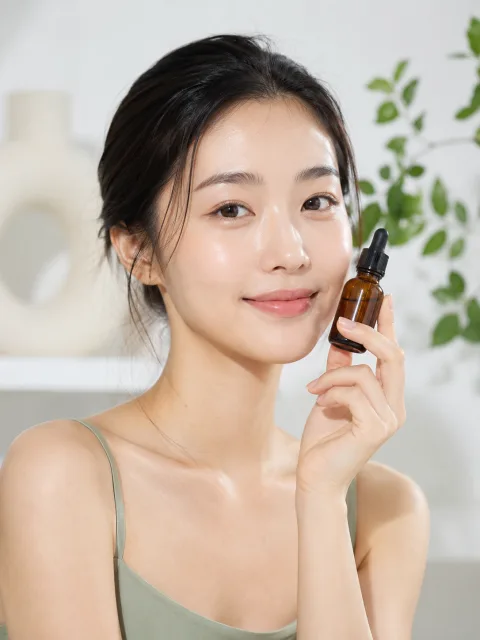
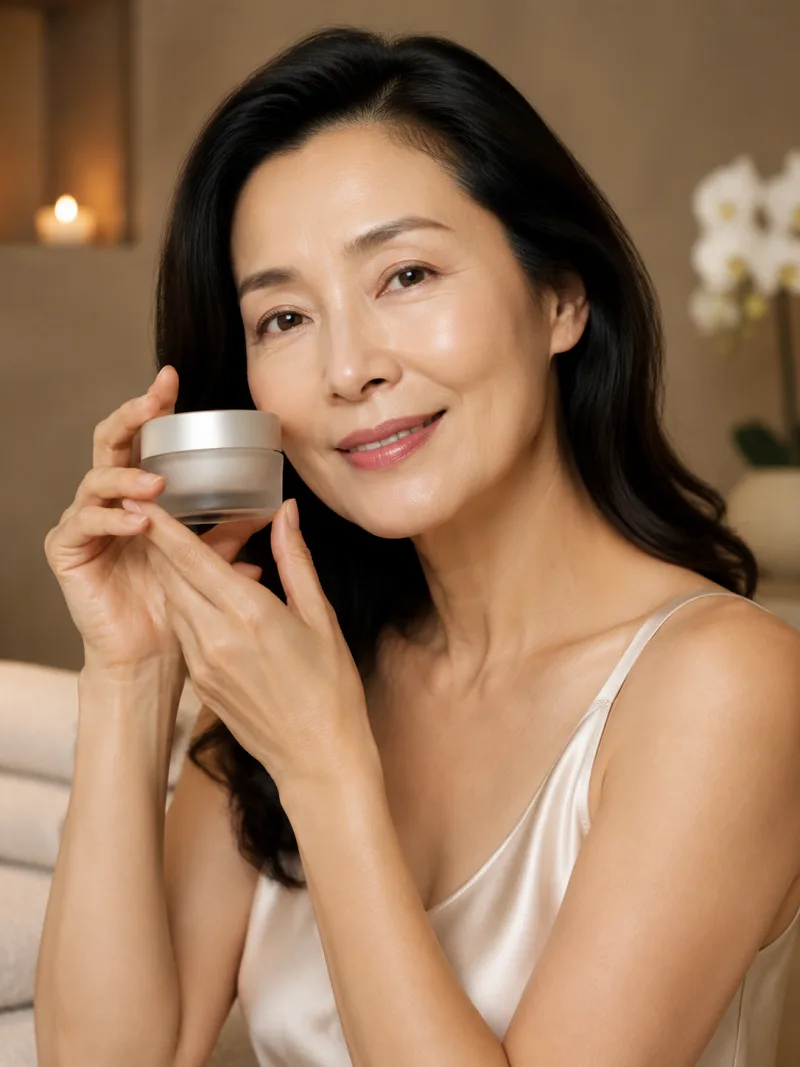
Skin is where beauty imagery is won or lost. Early generated faces had a porcelain smoothness that read instantly as artificial — and, worse for a skincare brand, implied a result no product delivers. Current models can render pores, fine vellus hair, natural highlights and believable texture, but only when the brief demands it and the review enforces it.
A workable skin-realism standard for beauty imagery:
- Visible pore structure at the resolution the image will actually be viewed at — especially in cheek and forehead zones near the product.
- Natural tonal variation. Real skin has subtle redness, undertone shifts and asymmetry. Uniform, poreless "airbrush skin" is rejected at review.
- Believable light behaviour. Skin has soft subsurface glow, not the hard specular sheen of plastic. Dewiness should sit on the texture, not replace it.
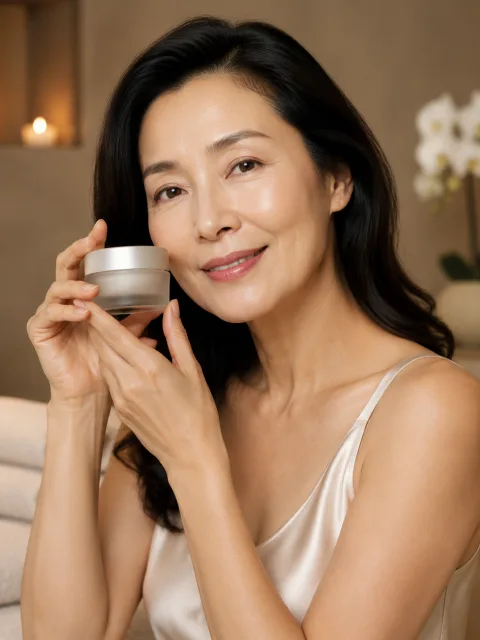
- Age honesty. Imagery for a product aimed at mature skin should show mature skin, rendered with the same care as any other casting choice.
The test worth applying is simple: would the image survive scrutiny from a customer who reads ingredient lists? If the skin looks like a filter, the brand loses credibility exactly where it needs it most.
Regulatory care: what the imagery must not do
Beauty is a regulated advertising category in every major market, and imagery counts as a claim. Rules differ by region and change over time, so this is general guidance rather than legal advice — but three principles hold broadly:
- No before/after constructions in generated imagery. A generated "after" depicts a result no real person obtained. Presenting it as an outcome invites regulatory trouble and destroys trust. Generated visuals should present the product and its world, not fabricate results.
- No misleading skin representation for efficacy. Most major ad codes restrict retouching that exaggerates what a product can do. The same logic applies to generation: skin in product imagery should not imply performance the product cannot deliver.
- Check disclosure requirements per platform and market. Some platforms and jurisdictions ask for AI-generated imagery to be flagged in certain contexts. Verify current rules where the campaign will actually run.
None of this limits a brand's ability to make beautiful imagery. It limits fabricated proof — which respectable beauty advertising avoided long before AI arrived.
Campaign vs PDP vs social: one product, three sets
A beauty launch rarely needs one image; it needs three distinct sets with different jobs. Generating them from the same locked references keeps the whole launch coherent.
| Campaign Set | PDP Set | Social Set | |
|---|---|---|---|
| Job | Build desire and brand world | Convert on the product page | Stop the scroll, sustain presence |
| Typical frames | Hero model + product, styled scenes | Packshots, texture, in-hand, scale | Vertical crops, lifestyle moments |
| Look | Editorial lighting, art direction | Clean, accurate, consistent angles | Native, lighter, higher variety |
| Volume needed | 3–8 frames | 6–10 per SKU | 15–30 per launch window |
| Packaging accuracy bar | Exact | Exact — this is the reference view | Exact |
Traditionally these three sets meant three briefs and often three productions. Generated from one reference kit — pack photos plus a locked model casting — they become one production with three output styles. That is where the economics compound: the marginal cost of the social set, the retailer crops and the seasonal refresh drops toward zero once the references are locked.
Casting and consistency across a beauty range
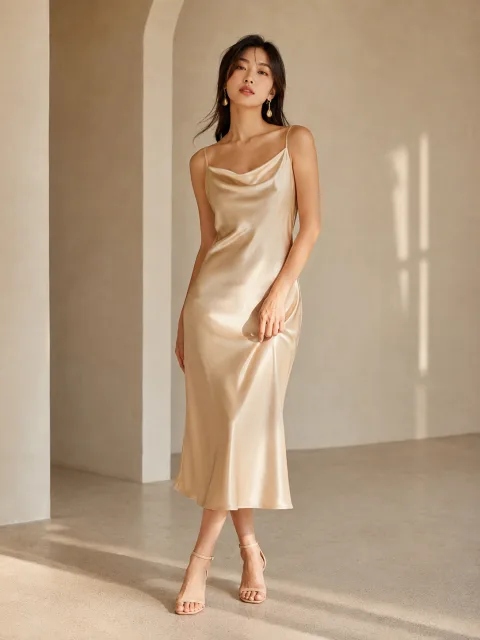
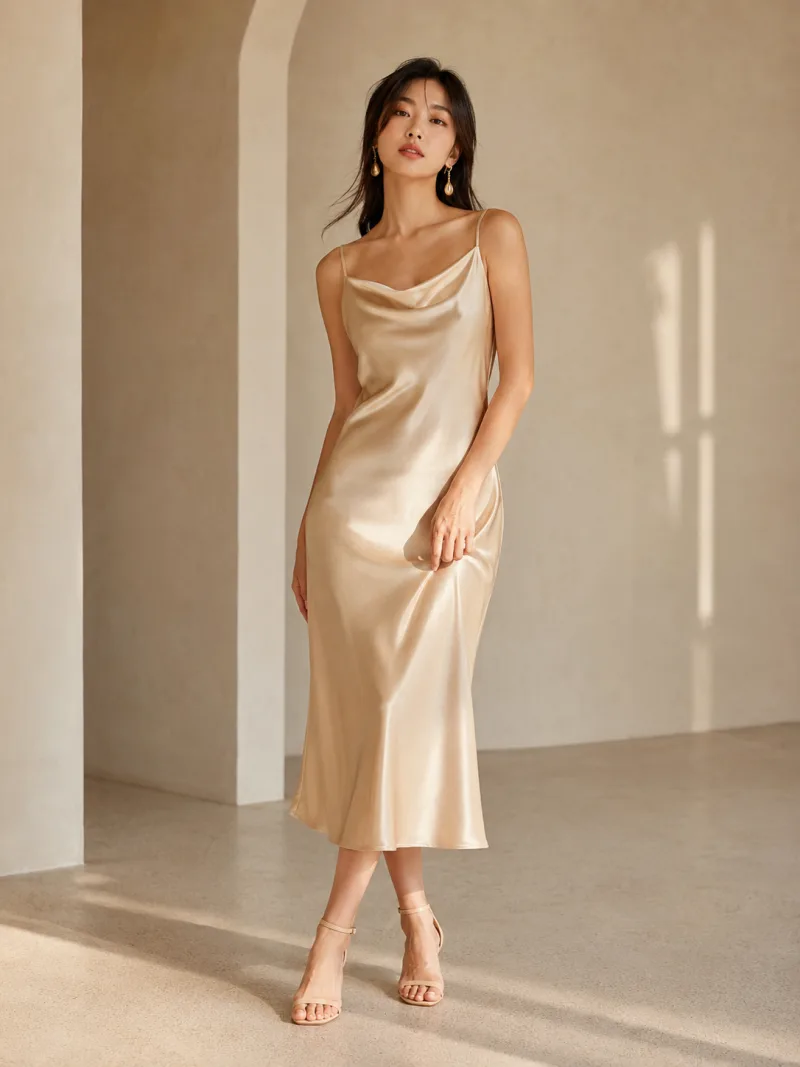
Beauty brands sell across skin tones, ages and skin types, and their imagery has to reflect that honestly. Generated casting makes range representation a directable choice rather than a scheduling problem: the same campaign look can be produced across a genuinely diverse cast without multiplying shoot days. The discipline that matters is the same one fashion labels use — lock the cast, reuse the same generated faces across the season, and keep lighting and grade constant so the range reads as one brand. The techniques overlap heavily with AI fashion photography, where consistent casting across a season is a solved production problem.
How a beauty brand starts
The entry path is deliberately light. A brand supplies clean packshots of each SKU, two or three reference images that define the campaign mood, and notes on casting and any claims constraints from its regulatory team. A first sample set comes back for review — packaging checked against the physical product, skin standard checked at full zoom — and revisions tighten from there. From locked references to a delivered launch set, the typical AI photoshoot cycle runs about 48 hours, which is usually faster than the studio could be booked, let alone shot and retouched.
For beauty teams, the practical promise is narrow and real: exact packaging, honest skin, three coherent sets per launch — at a cadence and cost that traditional production cannot match for volume work. The hero campaign may still warrant a physical shoot. Everything downstream of it no longer has to wait for one.