AI Photography for Menswear Brands: Tailoring and Lookbooks
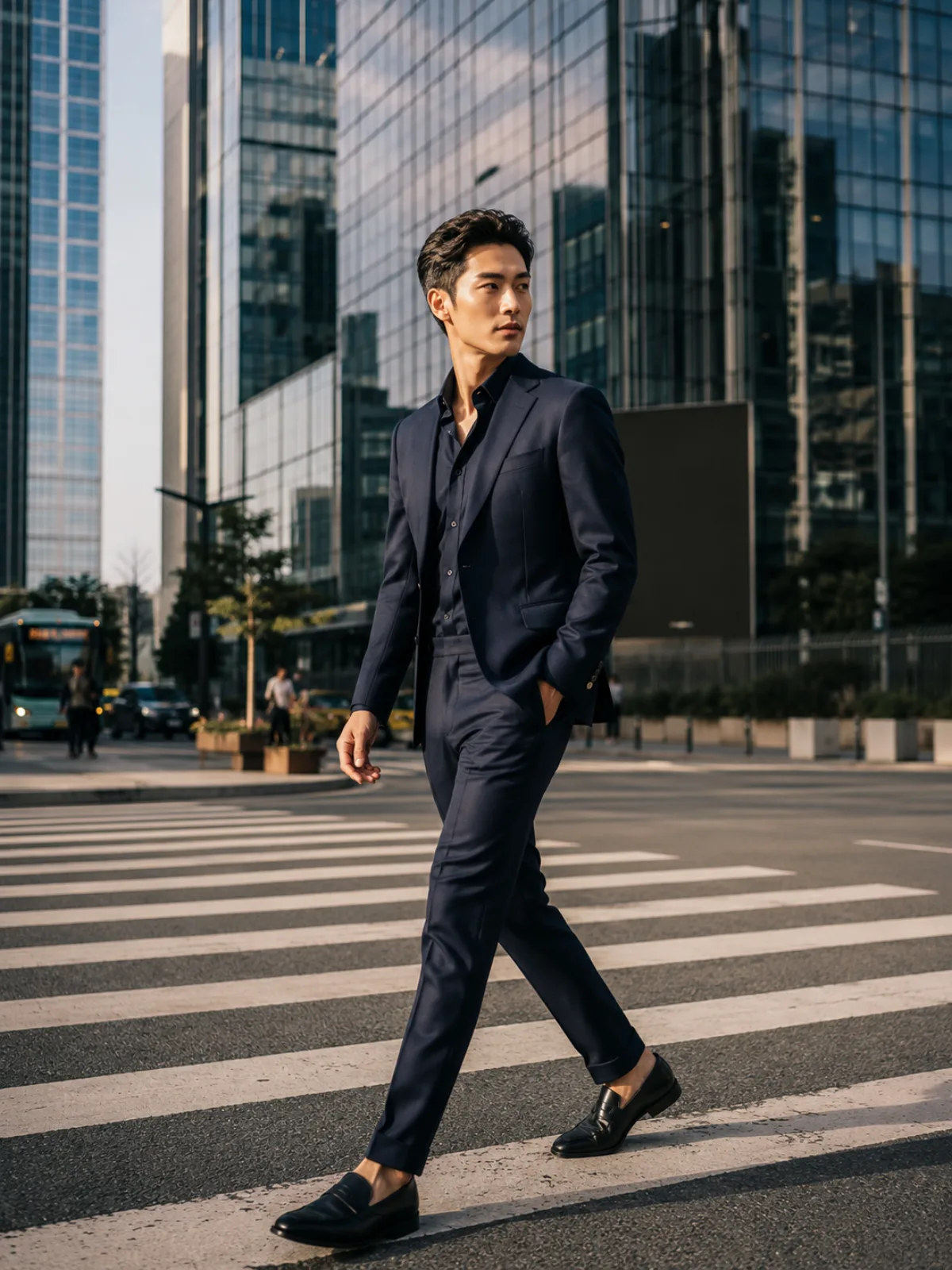
AI photography lets a menswear label produce fit-accurate tailoring, smart-casual and lookbook imagery from garment references alone — the same cast of male models, season after season, delivered in about 48 hours per set. For labels whose catalog runs to dozens of near-identical SKUs in different cloths and colours, it removes the most repetitive shoot days on the calendar.
Why menswear imagery is a fit problem before it is a style problem
Menswear customers read fit the way watch collectors read dials. Shoulder line, sleeve pitch, jacket length, trouser break — a menswear buyer scanning a product page evaluates all of it in seconds, and imagery that gets fit wrong costs sales and drives returns. That makes menswear a stricter test for generated imagery than most categories: the garment on the model must behave like the actual garment, cut the way it is actually cut.
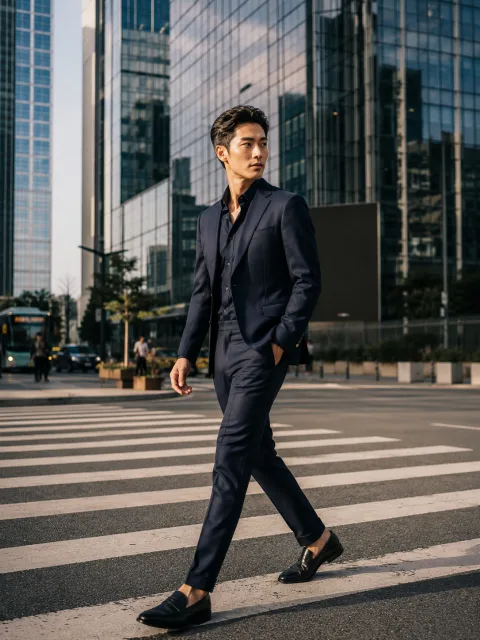
This is why reference-based generation matters more here than anywhere else in fashion. The workflow starts from the real garment — flat-lay or mannequin photography that captures the true silhouette, lapel roll, drape of the cloth and placement of details. Generation then dresses a model in that garment rather than inventing an approximate suit from a text description. On review, fit is checked the way a good tailor would check it:
- Shoulder and collar. The collar hugs the shirt collar; the shoulder ends where the shoulder ends. Divots and collapse are rejection criteria.
- Drape matches the cloth. A heavy flannel falls differently from a high-twist wool. The generated drape must match the actual fabric weight, not a generic "suit" prior.
- Proportions hold. Jacket length, button stance and trouser line match the real pattern, because the customer will measure the photo against the size chart.
- Details stay true. Pick stitching, pocket style, cuff buttons and pattern matching across seams are checked frame by frame.
Held to that standard, generated tailoring imagery earns its place. Below it, no amount of atmosphere rescues the image for this audience.
Consistent male casting, season after season
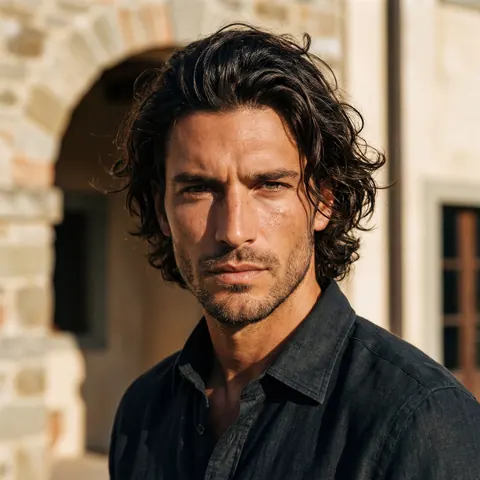
Menswear labels benefit more than most from a stable cast. The customer relationship is built on recognition: the same faces in the autumn lookbook and the spring drop signal a label with a point of view, and returning customers literally shop by model — "the guy my build wears the 40R."
With real models, keeping a cast stable across years is a scheduling and budget gamble. With generated casting, it is a saved specification. A label defines its models once — age range, build, grooming, the character of the face — and those exact models return for every season, every colourway and every channel. Practical advantages compound quietly:
- A new colourway of an existing jacket can be shot on the same model, in the same pose and light, without re-booking anyone.
- Size-inclusive casting becomes a direction choice: the same tailoring shown on more than one build, consistently, every season.
- Mid-season additions match the original lookbook exactly, instead of visibly coming from a different shoot day.
The craft sits in art direction rather than logistics — which is the general pattern with AI fashion photography: the production constraint disappears, and the creative standard becomes the whole job.
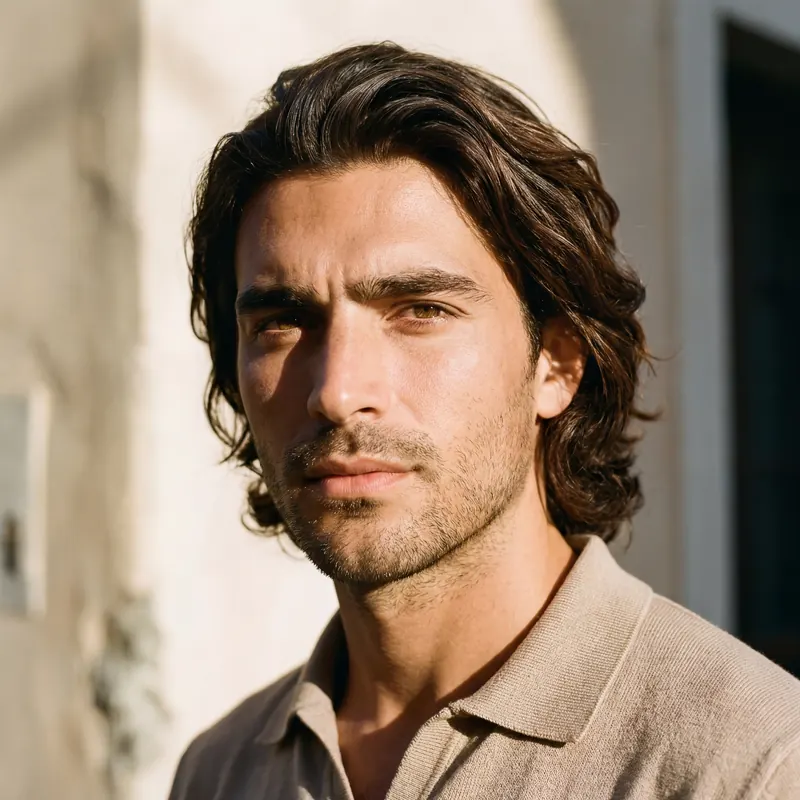
Catalog and editorial: two registers, one production
A menswear label needs two kinds of imagery that traditionally required two different productions. Catalog imagery is functional: consistent angles, even light, true colour, every SKU covered. Editorial imagery is emotional: location, attitude, narrative. Most labels can only afford to do one of them properly — usually catalog — and the brand feels it.
Generated production collapses the two into one pipeline with two output registers:
| Catalog Register | Editorial Register | |
|---|---|---|
| Job | Cover every SKU, convert on PDP | Build the brand world, carry campaigns |
| Look | Neutral background, even light, fixed angles | Location scenes, directional light, attitude |
| Volume | Every SKU, every colourway | 8–20 frames per season |
| Consistency bar | Identical framing across the range | Same cast and grade as catalog |
| Traditional cost driver | Studio days scale with SKU count | Location, travel, day rates |
| Generated cost driver | Marginal — same references reused | Brief and review time |
Because both registers are generated from the same garment references and the same locked cast, they match by construction — the editorial campaign and the product page finally look like the same brand. Our guide to AI fashion photoshoots for menswear walks through a season's production in detail.
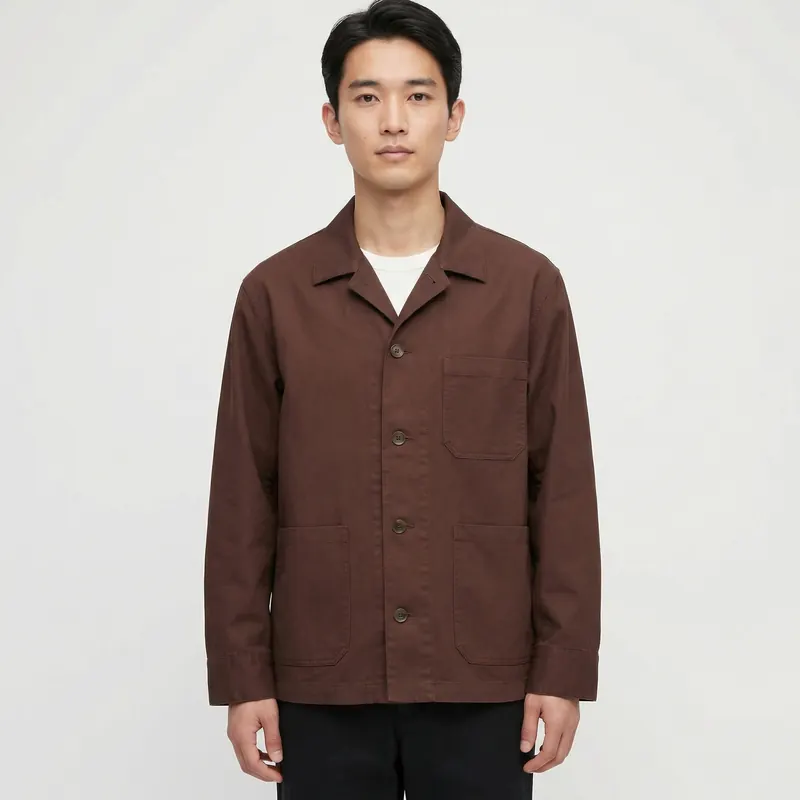
Smart-casual: the volume middle of the range
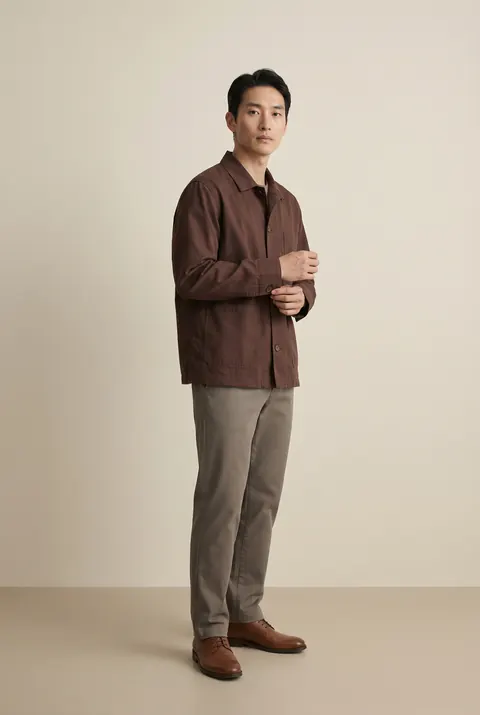
Between the suit and the graphic tee sits the part of menswear that actually moves volume: chinos, oxford shirts, knit polos, unstructured blazers. Smart-casual imagery has its own quiet difficulty — the pieces are simple, so the image has to carry the interest through styling, layering and setting, and the range logic means dozens of close variants need coverage without the feed turning monotonous.
This is where generated production is at its most efficient. One knit polo in six colours is one reference session and six directed variants, not six changes of a model under hot lights. Layering combinations — the blazer over the polo, the same polo under a raincoat — can be produced to match merchandising plans rather than what there was time to shoot. And seasonal context switches, the same shirt styled for spring terrace light and autumn city grey, are a brief rather than two location days.
The quality watch-outs in this register are subtle rather than dramatic. Knit texture should read as knit, not as a smooth print of one. Colour accuracy across a six-shade range matters because customers compare shades side by side on the collection page. And styling logic has to stay believable — cuffs, collars and tuck all behaving the way the real garments behave when actually worn. These are review-checklist items, and a production process that checks them consistently is what separates usable volume from filler.
What it costs, and when the shoot still wins
Traditional menswear production typically runs $10,000 to $40,000 for a seasonal campaign plus catalog coverage, depending on SKU count, cast size and locations — with catalog days scaling linearly as the range grows. A done-for-you AI photoshoot engagement prices on output scope instead, and the marginal frame gets cheaper as the range gets bigger, which inverts the usual economics of a large catalog.
Honest scoping still applies. A heritage tailoring house shooting a single hero campaign on film, where the point is the physical craft of the shoot itself, should keep shooting. Extreme close-ups of surface texture that must certify the cloth thread-by-thread favour a macro lens. Everything else in the menswear imagery load — catalog coverage, lookbooks, colourway variants, smart-casual volume, campaign scenes — is now producible at a standard that passes a tailor's eye, from references, in about two days per set.
How a menswear label starts
The first project is deliberately small: two or three garments, photographed clean; a short brief on casting and brand light; one catalog frame and one editorial frame per garment as the test. Fit review does the deciding — shoulder, drape, proportion, details — before any volume is commissioned. If the samples pass the label's own standard, the season's production plan follows, built on a full AI photography pipeline with the cast and look locked for reuse.
That sequencing keeps the risk where it belongs: no label commits to a new production method before seeing its own tailoring rendered to its own standard.