How Virtual Try-On Actually Works: A Non-Technical Explanation
You do not need to be a machine learning researcher to operate a fashion brand in 2026. But you do need enough technical grounding to tell when a vendor is selling you real capability versus hand-waving. This is a clear non-technical explanation of what is actually happening when a virtual try-on engine turns a flat garment image into on-model imagery.
Step one: body understanding
Whether the input is a shopper's selfie or a stock model image, the system first has to understand the body. This means estimating pose — where the joints are, which way the body is facing, what shape each limb has. The underlying technology here is pose estimation models that have been around since the mid-2010s (OpenPose, MediaPipe, and successors) but are now much more accurate.
Every modern virtual try-on system does this step. Quality varies. If the input photo is a shopper in a cluttered bedroom taken with bad lighting, body estimation is harder than a clean studio image.
Step two: garment understanding
The system also has to understand the garment. It needs to know where the hem ends, which part is the sleeve, how the fabric drapes, where the logo sits. This is a computer vision segmentation task — drawing the outline of every garment component.
High-fidelity garment understanding is where the best vendors pull ahead. Cheap virtual try-on gets the rough shape right but loses fabric texture, print placement, and intricate details. Premium vendors — including our internal pipeline at the studio — preserve every pattern, every stitch, every brand detail.
Step three: diffusion and compositing
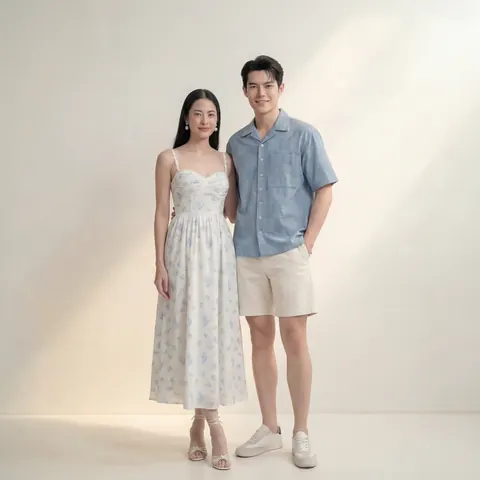
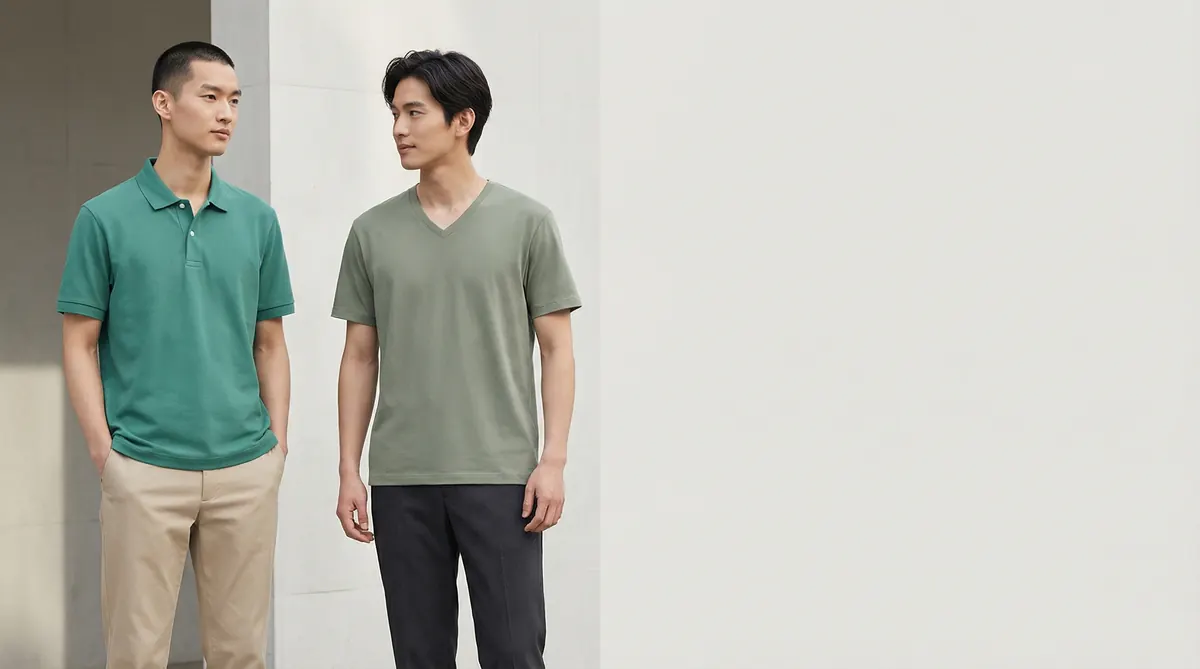
Once the system knows the body and the garment, it runs a generative diffusion model to render the garment on the body. Diffusion models work by starting with noise and iteratively refining it toward a target image, guided by text prompts and conditioning images. For try-on, the conditioning is the body pose plus the garment flat, and the output is a photorealistic on-model image.
Modern fashion-specialised diffusion models (Fashn, Botika, Flux fine-tunes, and purpose-built internal models) are trained on millions of on-model garment images so they learn how fabrics drape, how lighting interacts with textiles, how shadows fall. This is why the 2026 output is dramatically better than 2023 output.
Step four: human QA (this is what separates agencies from tools)
After generation, the raw model output goes to a human QA layer at any reputable agency. This is where imperfections — wonky fingers, fabric seam glitches, lighting mismatches — get caught and fixed. Self-serve consumer tools skip this step and let the shopper or the brand be the QA. AI Studio does human QA on every single image before it ships.
Why quality varies so much across vendors
Every vendor uses some version of the pipeline above. What varies is the quality of the models, the training data, the pose understanding, the garment detail preservation, and whether a human QA pass exists. The gap between the best and worst in the category is enormous — and getting wider as the leaders invest in better training data and the laggards commoditise.